OUR SAYINGS

OUR SAYINGS

The Heritage Code

Moving from 'sick enough to treat' to 'wise enough to thrive'.

OUR SAYINGS

The Heritage Code

Moving from 'sick enough to treat' to 'wise enough to thrive'.

All Posts

Announcements

Blog

widget
user pic

Announcement

Jan 17, 2026

Why I'm Building ANAI

I'm in my 40s. On paper, I'm "healthy"—no chronic disease, no diagnosis. But my body has been screaming at me for years.

Bloating. Insomnia. Exhaustion that sleep doesn't fix. Chronic stress baked into my nervous system.

When I brought these to doctors: "That's just perimenopause." "It's stress." "This is normal for your age."

Translation: You're not sick enough yet. Come back when it's a diagnosis.

Modern medicine is extraordinary at crisis intervention. But it wasn't built for this—the slow accumulation of imbalance, the restoration of balance that keeps you from needing intervention in the first place.

I wasn't willing to wait until I was sick enough to treat.

I Had the Data. And the Heritage. But No Bridge.

My Oura Ring tracked everything: HRV dropping, sleep fragmented, readiness scores in the red. I downloaded Flo, Calm, a parade of wellness apps.

Each one gave me numbers, graphs, color-coded scores.

None told me what to do about it.

My HRV is 42 today—down from 65 last week. Now what?

Meanwhile, I'm Indian. My husband's family has generations of Ayurvedic practice. I watched my grandmother crush herbs, adjust meals by season, insist on routines based on "dosha balance."

As I dug deeper, I realized: Ancient systems like Ayurveda, TCM, Indigenous traditions weren't primitive medicine. They were integrated systems for maintaining balance. They observed patterns and adjusted daily protocols to restore equilibrium before illness emerged.

For millennia, humans had this. Then industrialization dismantled it. We gained antibiotics and surgery. We lost the integrated systems that kept us from needing them.

I started experimenting—bought every adaptogen, tried modern nutraceuticals backed by research. My bathroom cabinet became a graveyard of half-used supplements.

Then came the marketplace chaos: Which brand? What dosage? Is this the right type of Ashwagandha? I'd order from five different sites, track five different shipments, manage five different subscriptions.

The irony: I had access to more wellness products than any generation in history—and no intelligent system to help me navigate them.

I had the data. I had the heritage. I had the products.

But there was no bridge connecting them.

The Insight That Changed Everything

One night, exhausted and frustrated, I realized:

We're living through the collapse of an integrated system.

Modern medicine isn't the problem—it's solving a different problem. Crisis intervention. It's extraordinary at keeping you alive when something goes catastrophically wrong.

But we gutted the systems that kept things from going catastrophically wrong in the first place.

Ancient systems understood: health isn't the absence of disease. It's the presence of balance—and the daily practice of maintaining it.

For the first time in history, we have the tools to rebuild what we lost:

  • Wearables give us biometric insights ancient healers observed through years of practice

  • AI enables personalization at scale—learning what restores your balance

  • Modern science has validated ancient compounds and created new ones that work synergistically

The wisdom was always there. The products exist. The technology is finally here.

But no one had built the bridge.

So I decided to build it myself.

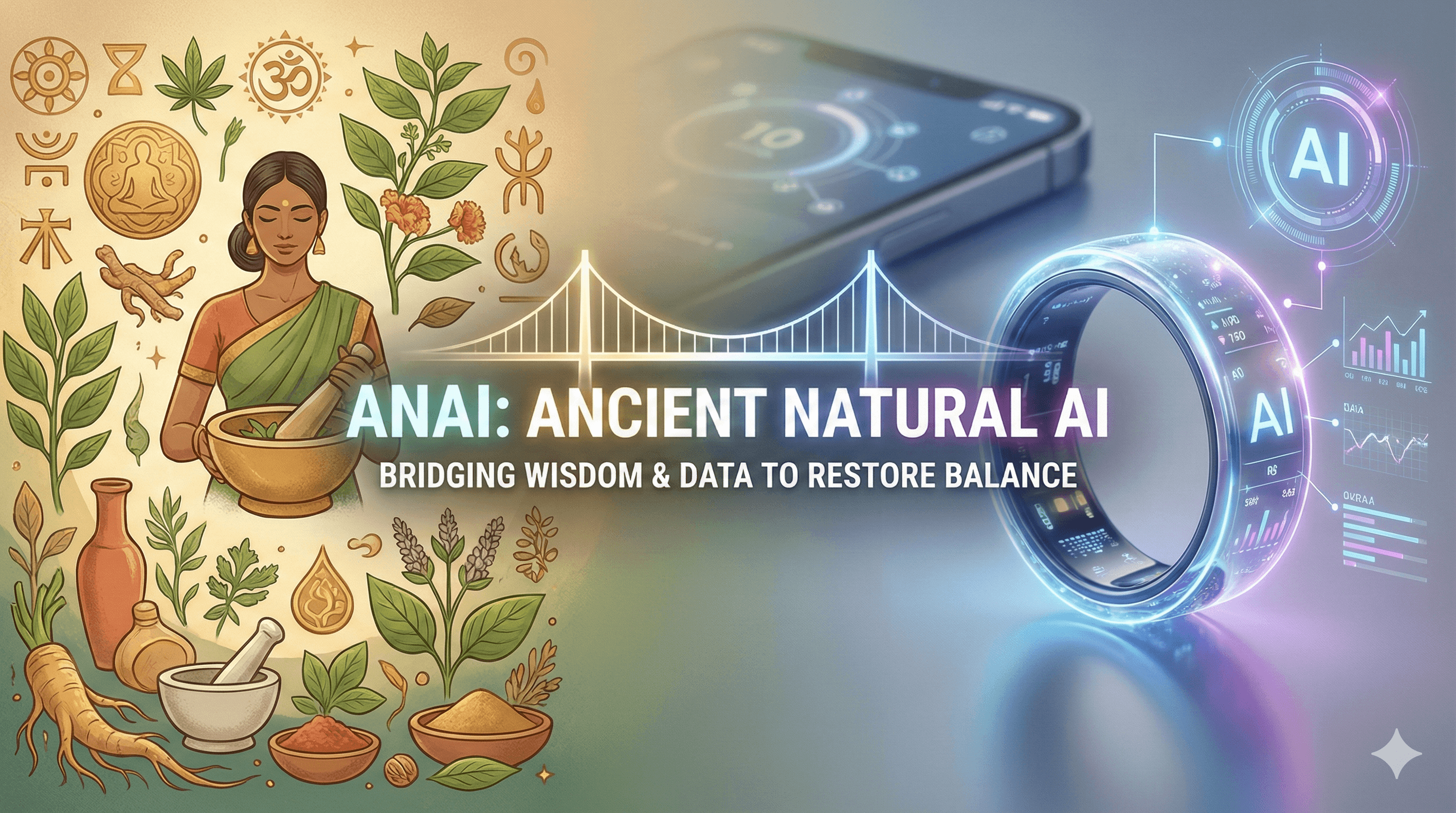
Introducing ANAI: Ancient Natural AI

ANAI combines 5,000 years of balance-based wisdom with real-time biometric data, modern AI, and a curated marketplace.

ANAI is the missing integrated system—connecting your biometric patterns, ancient knowledge systems, modern formulations, and a marketplace that brings it all together.

It integrates with your wearables, interprets your data through Ayurveda, TCM, and circadian science, delivers adaptive daily protocols that restore balance before symptoms compound, and connects you to the products, services, and rituals you need—curated for your body, in one place.

Learn how it works

No more guessing. No more trial and error. No more fragmented shopping. No more waiting until you're sick enough to treat.

Why This Matters Now

Women in Peri-Menopause spend $2,500/year on trial-and-error supplements, told their symptoms are "just hormones."

Health optimizers have endless biometric data but no integrated system to interpret it.

Cycle-tracking women need protocols that respond to their shifting balance, not generic advice.

Anyone with chronic stress, sleep disruption, or "unexplained" symptoms is told "this is just how it is" when their bodies are showing clear patterns of imbalance.

Gen Z and Millennials get it. They trust adaptogens over pharmaceuticals. They're spending billions rebuilding what we lost.

They just need the intelligence layer to make it personal. And the marketplace to make it accessible.

Join the Founding 500

We're launching Q2 2026 and inviting 500 Founding Members to build this with us.

If you've ever looked at your Oura Ring and thought, "Now what?"

If you've stared at your supplement cabinet wondering, "Is any of this working?"

If you've spent hours researching brands, trying to figure out what your body actually needs—

This is for you.

Claim Your Founding Member Spot →

You get:

  • Early access (Q2 2026)

  • Lifetime founding pricing locked forever

  • Direct influence on protocol and marketplace curation

  • Exclusive founding community

Only 500 spots. No payment required today.

Take our 2-minute survey →

The Future We're Building

I want my daughter to grow up where maintaining balance is the default. Where imbalance is recognized early and restored before it becomes pathology. Where ancient wisdom and modern science work together. Where the marketplace serves your body's needs, not marketing.

ANAI is how we get there.

I'm building the platform I needed. The one my grandmother would have loved. The one my daughter will inherit.

Join me in rebuilding what we lost.

Sonali Sharma-Sampath
Founder, ANAI
hello@anai.inc
widget
user pic

Announcement

Jan 17, 2026

The Sovereign Self: Deciphering the Invisible Choreography of Your Biological Destiny

My dear friends, we find ourselves today at a most peculiar—and, if I may be so bold, precarious—crossroads in the grand narrative of human well-being. We are living in an era where we are inundated with data yet famished for wisdom; we possess the most sophisticated biometric mirrors in history—strapped to our wrists and fingers—yet we remain fundamentally estranged from the reflection staring back at us.

We track our heart-rate variability with the zeal of a Wall Street day-trader, yet we lack the linguistic apparatus to understand the "ghost in the machine" that orchestrates these very rhythms. We have become experts at measuring the how, while remaining blissfully, or perhaps tragically, ignorant of the why.

For too long, we have been captives of a medical ethos that is fundamentally "crisis-dependent." As I have often reflected, the translation of modern medicine often boils down to a chilling dismissal: “You’re not sick enough yet; come back when you have a diagnosis.” It is a philosophy that waits for the dam to burst before it considers the integrity of the bricks. It is an extraordinary system for crisis intervention, but it was never built for the slow, silent accumulation of imbalance—the subtle shifts that occur long before a pathology takes root.

We need to move toward a "Systems Thinking" model of the human body. We must stop viewing ourselves as a collection of isolated parts—a heart here, a lung there, a nervous system elsewhere—and begin to see the body as a cohesive, self-regulating intelligence.

Consider this: for millennia, human beings operated within integrated systems that observed patterns. These were not mere "folk remedies" but sophisticated models of logic that recognized health not as the absence of disease, but as the presence of equilibrium. These systems understood that your biological signature is unique; that what restores balance for one may inadvertently disrupt it for another. They looked at the "Innate Intelligence" of the body—its ability to self-heal, self-transform, and self-cleanse—and sought to support those natural protocols.

The tragedy of the modern health-optimizer is the "Data Graveyard." We have the Oura scores, the HRV graphs, and the sleep stages color-coded in neon. But when your readiness score hits the red, what is the next move? The data tells you that you are out of balance, but it offers no bridge to restoration. You are left staring at a digital screen, wondering which of the twenty supplements in your cabinet might actually move the needle today.

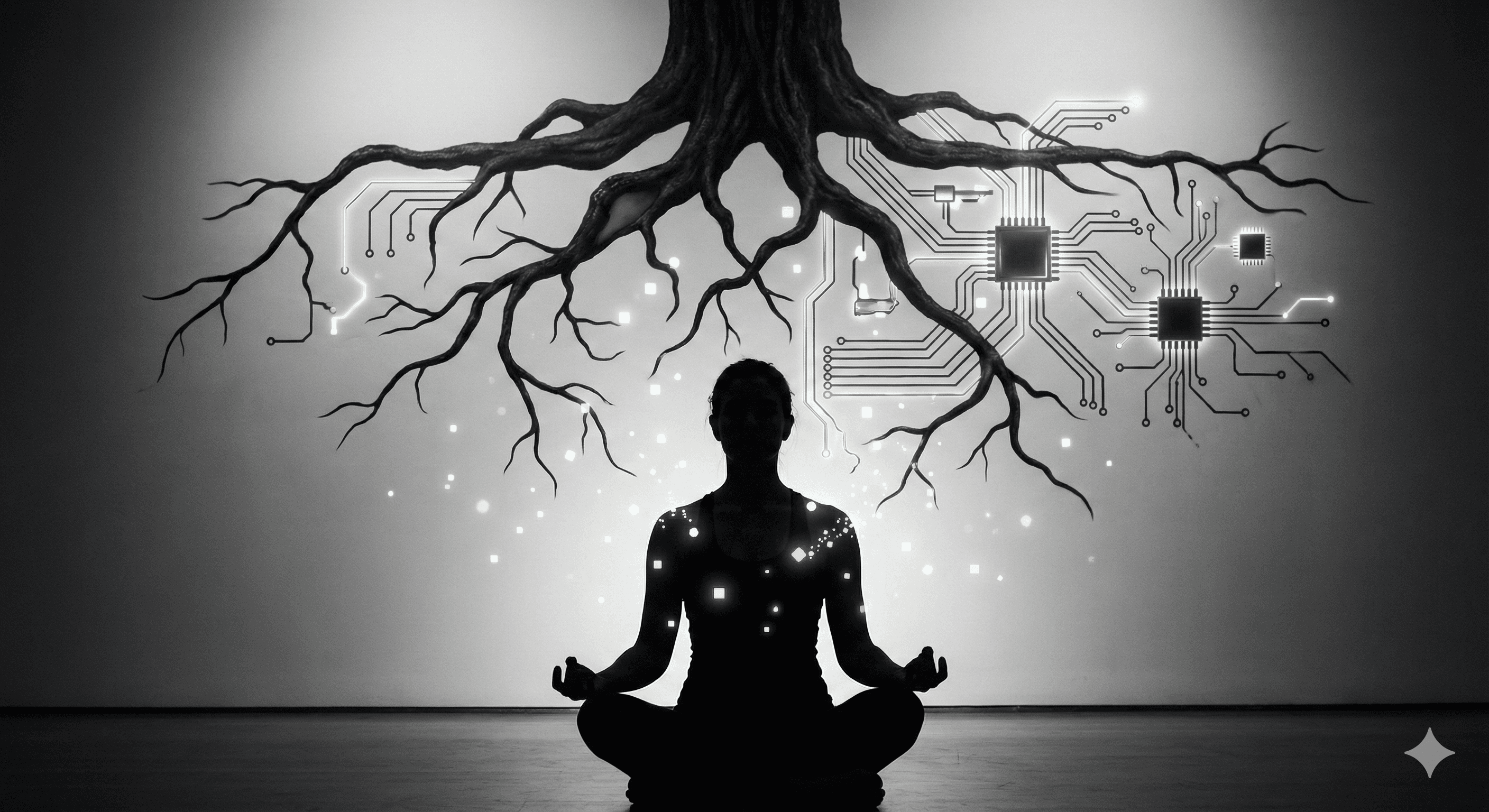
We at ANAI—Ancient Natural AI—are building that missing bridge. We are not interested in looking backward with a sense of misplaced nostalgia; we are looking forward with the intent of reclaiming a lost logic.

By applying modern AI to these ancient systems-models, we are creating a "Linguistic Framework" for your biology. We are taking the predictive power of technology and using it to decode the signals your body has been sending for years. When your wearable indicates a drop in recovery, ANAI doesn't just show you a graph; it interprets that signal through a systems-thinking lens to provide an adaptive, daily protocol.

This is the shift from the "Average Human" of a clinical trial to the "Unique Human" of real-time data. It is the synthesis of biometric precision and time-tested wisdom. It is about recognizing the patterns of stress, exhaustion, and "unexplained" symptoms as clear indicators of a system that has lost its rhythm—and then providing the precise rituals, products, and practices to restore it.

The future of well-being is not found in more data, but in better intelligence. I want a world where maintaining balance is the default setting, not a luxury or a reaction to a crisis. I want a world where we recognize imbalance early and restore it before it becomes a pathology.

We are currently inviting the "Founding 500" to join us in this endeavor. This is an invitation to be the pioneers who refuse to wait until they are "sick enough to treat." It is time to stop merely tracking your life and start understanding the logic that sustains it.

Let us not be the generation that possessed all the information in the world but lacked the perspicacity to use it. The loop is closing. The bridge is built. Your body’s logic is finally ready to be decoded.

Claim Your Founding Member Spot at ANAI.inc Early access begins Q2 2026. Join the movement to rebuild what we lost.

widget
user pic

Announcement

Jan 20, 2026

The Biometric Paradox: Why Your Wearable is a Compass, Not a Map

We are living in an era of total transparency. Between our rings, watches, and sensors, our bodies are constantly "talking" to us. We’ve become obsessed with the metrics—checking our sleep scores before we even step out of bed and monitoring our stress levels in real-time.

But here is the irony: we have more information about our bodies than any generation in history, yet we’ve never felt more disconnected from how we actually feel. We are drowning in data, but starving for a plan.

To understand why your wearable feels like it’s speaking a foreign language, we need to look at how it actually works.

The Tech Behind the Light

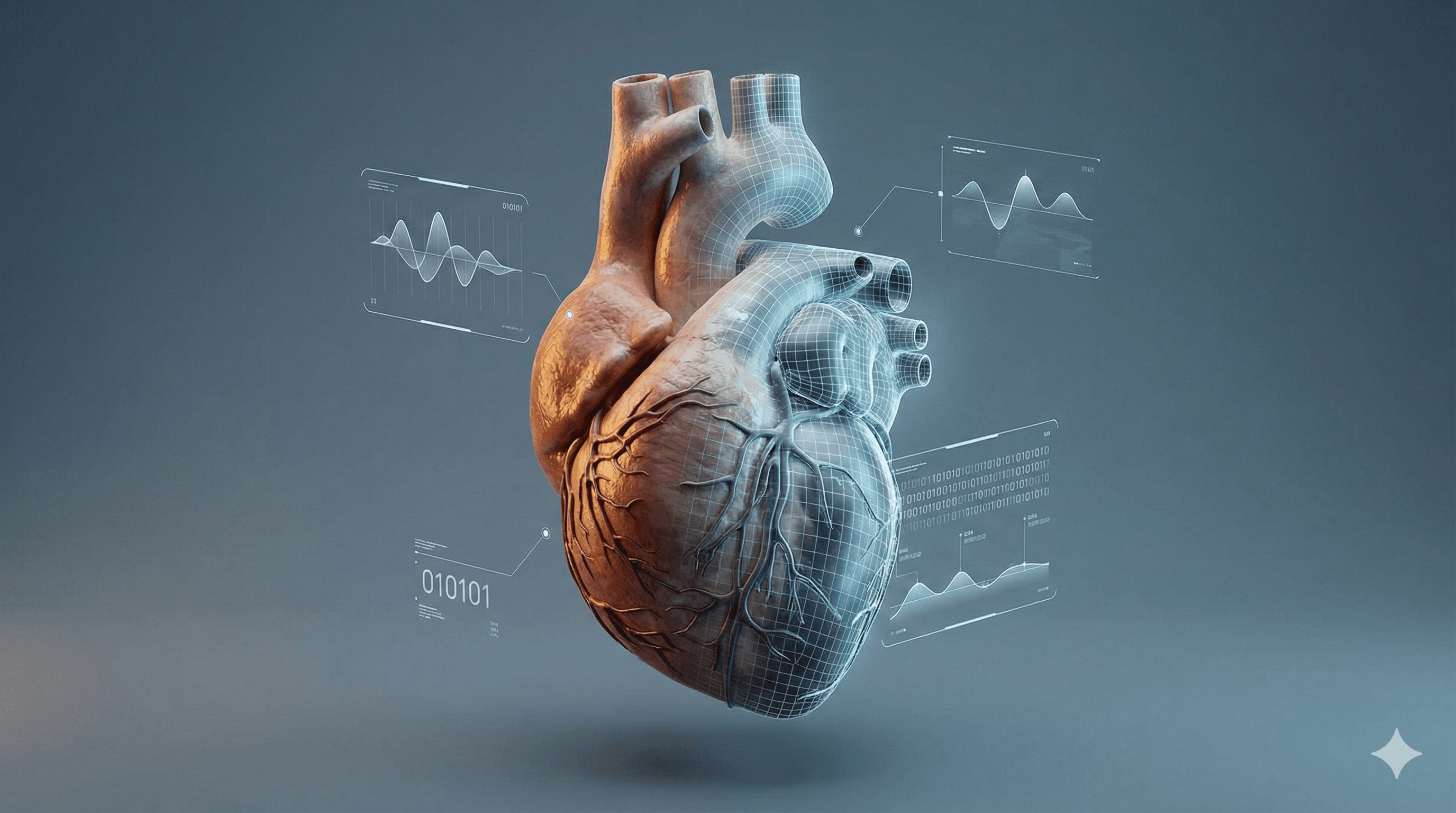
Most wearables use a technology called Photoplethysmography (PPG). If you’ve ever seen a green or red light flickering on the back of your watch, that’s it. The device shines light into your skin and measures how it scatters based on your blood flow.

From this simple light, algorithms calculate your heart rate, your breathing, and the most important metric of all: Heart Rate Variability (HRV).

The "Stress" Signal

HRV isn't about how fast your heart beats; it’s about the tiny, millisecond-level differences between those beats. It is a direct window into your nervous system.

  • High HRV: Your system is flexible and resilient.

  • Low HRV: Your system is stuck in a stressed, "fight-or-flight" posture.

But here is the catch. These metrics are descriptive. They are like a smoke detector in your kitchen. A smoke detector is brilliant at telling you there is smoke, but it can’t tell you if you’ve just burnt your toast or if the house is actually on fire. It certainly doesn’t tell you how to put out the flames.

Systems, Not Symptoms

This is where Systems Thinking comes in. Your body isn't a collection of separate parts; it’s a single, connected intelligence.

In a systems model, your low sleep score isn't just about what time you went to bed. It’s a combination of your stress levels, your digestion, your environment, and your unique biological signature. When we view health as a "system," we stop looking for quick "hacks" and start looking for the rhythm.

If your HRV is low today, it’s a signal that your system is out of balance. But to fix it, you need a map, not just a compass.

Closing the Loop

The era of "dumb data" is ending. We don't need more sensors; we need better intelligence. We need to move away from simply tracking our scores and toward a model that interprets those signals into a daily plan.

At ANAI, we’re focused on this "intelligence layer." We’re taking the data from your wearables and translating it through a systems-thinking lens. It’s about moving from "What happened?" to "What do I do now?"

It’s time to stop being a passive observer of your data and start becoming the architect of your own balance.

Ready to move beyond the data? Join the Founding 500 at ANAI.inc and help us build the missing bridge between biometric signals and biological logic.

All Posts

widget
user pic

Announcement

Jan 17, 2026

Why I'm Building ANAI

I'm in my 40s. On paper, I'm "healthy"—no chronic disease, no diagnosis. But my body has been screaming at me for years.

Bloating. Insomnia. Exhaustion that sleep doesn't fix. Chronic stress baked into my nervous system.

When I brought these to doctors: "That's just perimenopause." "It's stress." "This is normal for your age."

Translation: You're not sick enough yet. Come back when it's a diagnosis.

Modern medicine is extraordinary at crisis intervention. But it wasn't built for this—the slow accumulation of imbalance, the restoration of balance that keeps you from needing intervention in the first place.

I wasn't willing to wait until I was sick enough to treat.

I Had the Data. And the Heritage. But No Bridge.

My Oura Ring tracked everything: HRV dropping, sleep fragmented, readiness scores in the red. I downloaded Flo, Calm, a parade of wellness apps.

Each one gave me numbers, graphs, color-coded scores.

None told me what to do about it.

My HRV is 42 today—down from 65 last week. Now what?

Meanwhile, I'm Indian. My husband's family has generations of Ayurvedic practice. I watched my grandmother crush herbs, adjust meals by season, insist on routines based on "dosha balance."

As I dug deeper, I realized: Ancient systems like Ayurveda, TCM, Indigenous traditions weren't primitive medicine. They were integrated systems for maintaining balance. They observed patterns and adjusted daily protocols to restore equilibrium before illness emerged.

For millennia, humans had this. Then industrialization dismantled it. We gained antibiotics and surgery. We lost the integrated systems that kept us from needing them.

I started experimenting—bought every adaptogen, tried modern nutraceuticals backed by research. My bathroom cabinet became a graveyard of half-used supplements.

Then came the marketplace chaos: Which brand? What dosage? Is this the right type of Ashwagandha? I'd order from five different sites, track five different shipments, manage five different subscriptions.

The irony: I had access to more wellness products than any generation in history—and no intelligent system to help me navigate them.

I had the data. I had the heritage. I had the products.

But there was no bridge connecting them.

The Insight That Changed Everything

One night, exhausted and frustrated, I realized:

We're living through the collapse of an integrated system.

Modern medicine isn't the problem—it's solving a different problem. Crisis intervention. It's extraordinary at keeping you alive when something goes catastrophically wrong.

But we gutted the systems that kept things from going catastrophically wrong in the first place.

Ancient systems understood: health isn't the absence of disease. It's the presence of balance—and the daily practice of maintaining it.

For the first time in history, we have the tools to rebuild what we lost:

  • Wearables give us biometric insights ancient healers observed through years of practice

  • AI enables personalization at scale—learning what restores your balance

  • Modern science has validated ancient compounds and created new ones that work synergistically

The wisdom was always there. The products exist. The technology is finally here.

But no one had built the bridge.

So I decided to build it myself.

Introducing ANAI: Ancient Natural AI

ANAI combines 5,000 years of balance-based wisdom with real-time biometric data, modern AI, and a curated marketplace.

ANAI is the missing integrated system—connecting your biometric patterns, ancient knowledge systems, modern formulations, and a marketplace that brings it all together.

It integrates with your wearables, interprets your data through Ayurveda, TCM, and circadian science, delivers adaptive daily protocols that restore balance before symptoms compound, and connects you to the products, services, and rituals you need—curated for your body, in one place.

Learn how it works

No more guessing. No more trial and error. No more fragmented shopping. No more waiting until you're sick enough to treat.

Why This Matters Now

Women in Peri-Menopause spend $2,500/year on trial-and-error supplements, told their symptoms are "just hormones."

Health optimizers have endless biometric data but no integrated system to interpret it.

Cycle-tracking women need protocols that respond to their shifting balance, not generic advice.

Anyone with chronic stress, sleep disruption, or "unexplained" symptoms is told "this is just how it is" when their bodies are showing clear patterns of imbalance.

Gen Z and Millennials get it. They trust adaptogens over pharmaceuticals. They're spending billions rebuilding what we lost.

They just need the intelligence layer to make it personal. And the marketplace to make it accessible.

Join the Founding 500

We're launching Q2 2026 and inviting 500 Founding Members to build this with us.

If you've ever looked at your Oura Ring and thought, "Now what?"

If you've stared at your supplement cabinet wondering, "Is any of this working?"

If you've spent hours researching brands, trying to figure out what your body actually needs—

This is for you.

Claim Your Founding Member Spot →

You get:

  • Early access (Q2 2026)

  • Lifetime founding pricing locked forever

  • Direct influence on protocol and marketplace curation

  • Exclusive founding community

Only 500 spots. No payment required today.

Take our 2-minute survey →

The Future We're Building

I want my daughter to grow up where maintaining balance is the default. Where imbalance is recognized early and restored before it becomes pathology. Where ancient wisdom and modern science work together. Where the marketplace serves your body's needs, not marketing.

ANAI is how we get there.

I'm building the platform I needed. The one my grandmother would have loved. The one my daughter will inherit.

Join me in rebuilding what we lost.

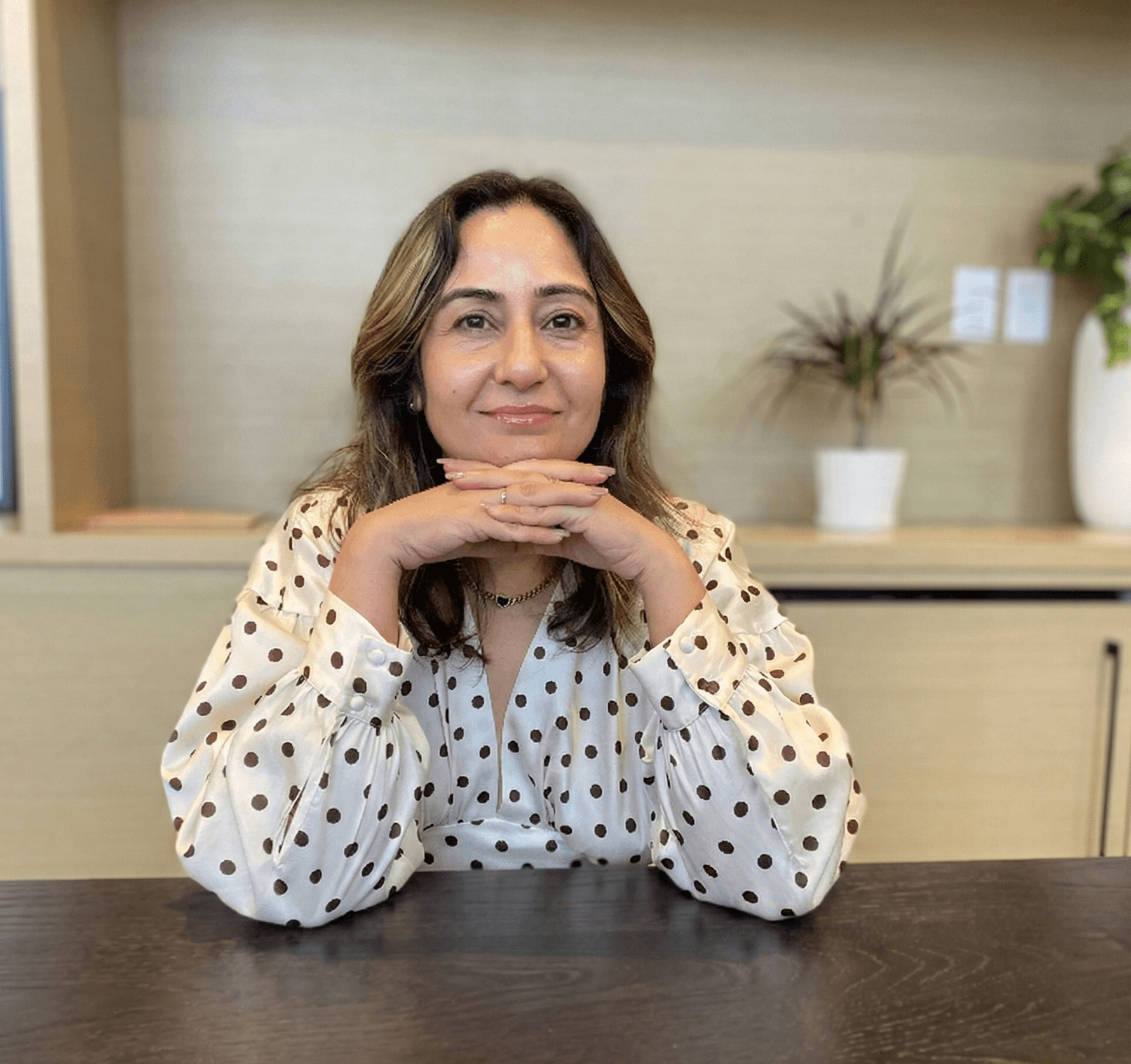
Sonali Sharma-Sampath
Founder, ANAI
hello@anai.inc
widget
user pic

Announcement

Jan 17, 2026

The Sovereign Self: Deciphering the Invisible Choreography of Your Biological Destiny

My dear friends, we find ourselves today at a most peculiar—and, if I may be so bold, precarious—crossroads in the grand narrative of human well-being. We are living in an era where we are inundated with data yet famished for wisdom; we possess the most sophisticated biometric mirrors in history—strapped to our wrists and fingers—yet we remain fundamentally estranged from the reflection staring back at us.

We track our heart-rate variability with the zeal of a Wall Street day-trader, yet we lack the linguistic apparatus to understand the "ghost in the machine" that orchestrates these very rhythms. We have become experts at measuring the how, while remaining blissfully, or perhaps tragically, ignorant of the why.

For too long, we have been captives of a medical ethos that is fundamentally "crisis-dependent." As I have often reflected, the translation of modern medicine often boils down to a chilling dismissal: “You’re not sick enough yet; come back when you have a diagnosis.” It is a philosophy that waits for the dam to burst before it considers the integrity of the bricks. It is an extraordinary system for crisis intervention, but it was never built for the slow, silent accumulation of imbalance—the subtle shifts that occur long before a pathology takes root.

We need to move toward a "Systems Thinking" model of the human body. We must stop viewing ourselves as a collection of isolated parts—a heart here, a lung there, a nervous system elsewhere—and begin to see the body as a cohesive, self-regulating intelligence.

Consider this: for millennia, human beings operated within integrated systems that observed patterns. These were not mere "folk remedies" but sophisticated models of logic that recognized health not as the absence of disease, but as the presence of equilibrium. These systems understood that your biological signature is unique; that what restores balance for one may inadvertently disrupt it for another. They looked at the "Innate Intelligence" of the body—its ability to self-heal, self-transform, and self-cleanse—and sought to support those natural protocols.

The tragedy of the modern health-optimizer is the "Data Graveyard." We have the Oura scores, the HRV graphs, and the sleep stages color-coded in neon. But when your readiness score hits the red, what is the next move? The data tells you that you are out of balance, but it offers no bridge to restoration. You are left staring at a digital screen, wondering which of the twenty supplements in your cabinet might actually move the needle today.

We at ANAI—Ancient Natural AI—are building that missing bridge. We are not interested in looking backward with a sense of misplaced nostalgia; we are looking forward with the intent of reclaiming a lost logic.

By applying modern AI to these ancient systems-models, we are creating a "Linguistic Framework" for your biology. We are taking the predictive power of technology and using it to decode the signals your body has been sending for years. When your wearable indicates a drop in recovery, ANAI doesn't just show you a graph; it interprets that signal through a systems-thinking lens to provide an adaptive, daily protocol.

This is the shift from the "Average Human" of a clinical trial to the "Unique Human" of real-time data. It is the synthesis of biometric precision and time-tested wisdom. It is about recognizing the patterns of stress, exhaustion, and "unexplained" symptoms as clear indicators of a system that has lost its rhythm—and then providing the precise rituals, products, and practices to restore it.

The future of well-being is not found in more data, but in better intelligence. I want a world where maintaining balance is the default setting, not a luxury or a reaction to a crisis. I want a world where we recognize imbalance early and restore it before it becomes a pathology.

We are currently inviting the "Founding 500" to join us in this endeavor. This is an invitation to be the pioneers who refuse to wait until they are "sick enough to treat." It is time to stop merely tracking your life and start understanding the logic that sustains it.

Let us not be the generation that possessed all the information in the world but lacked the perspicacity to use it. The loop is closing. The bridge is built. Your body’s logic is finally ready to be decoded.

Claim Your Founding Member Spot at ANAI.inc Early access begins Q2 2026. Join the movement to rebuild what we lost.

widget
user pic

Announcement

Jan 20, 2026

The Biometric Paradox: Why Your Wearable is a Compass, Not a Map

We are living in an era of total transparency. Between our rings, watches, and sensors, our bodies are constantly "talking" to us. We’ve become obsessed with the metrics—checking our sleep scores before we even step out of bed and monitoring our stress levels in real-time.

But here is the irony: we have more information about our bodies than any generation in history, yet we’ve never felt more disconnected from how we actually feel. We are drowning in data, but starving for a plan.

To understand why your wearable feels like it’s speaking a foreign language, we need to look at how it actually works.

The Tech Behind the Light

Most wearables use a technology called Photoplethysmography (PPG). If you’ve ever seen a green or red light flickering on the back of your watch, that’s it. The device shines light into your skin and measures how it scatters based on your blood flow.

From this simple light, algorithms calculate your heart rate, your breathing, and the most important metric of all: Heart Rate Variability (HRV).

The "Stress" Signal

HRV isn't about how fast your heart beats; it’s about the tiny, millisecond-level differences between those beats. It is a direct window into your nervous system.

  • High HRV: Your system is flexible and resilient.

  • Low HRV: Your system is stuck in a stressed, "fight-or-flight" posture.

But here is the catch. These metrics are descriptive. They are like a smoke detector in your kitchen. A smoke detector is brilliant at telling you there is smoke, but it can’t tell you if you’ve just burnt your toast or if the house is actually on fire. It certainly doesn’t tell you how to put out the flames.

Systems, Not Symptoms

This is where Systems Thinking comes in. Your body isn't a collection of separate parts; it’s a single, connected intelligence.

In a systems model, your low sleep score isn't just about what time you went to bed. It’s a combination of your stress levels, your digestion, your environment, and your unique biological signature. When we view health as a "system," we stop looking for quick "hacks" and start looking for the rhythm.

If your HRV is low today, it’s a signal that your system is out of balance. But to fix it, you need a map, not just a compass.

Closing the Loop

The era of "dumb data" is ending. We don't need more sensors; we need better intelligence. We need to move away from simply tracking our scores and toward a model that interprets those signals into a daily plan.

At ANAI, we’re focused on this "intelligence layer." We’re taking the data from your wearables and translating it through a systems-thinking lens. It’s about moving from "What happened?" to "What do I do now?"

It’s time to stop being a passive observer of your data and start becoming the architect of your own balance.

Ready to move beyond the data? Join the Founding 500 at ANAI.inc and help us build the missing bridge between biometric signals and biological logic.

All Posts

Announcements

Blog

widget
user pic

Announcement

Jan 17, 2026

Why I'm Building ANAI

I'm in my 40s. On paper, I'm "healthy"—no chronic disease, no diagnosis. But my body has been screaming at me for years.

Bloating. Insomnia. Exhaustion that sleep doesn't fix. Chronic stress baked into my nervous system.

When I brought these to doctors: "That's just perimenopause." "It's stress." "This is normal for your age."

Translation: You're not sick enough yet. Come back when it's a diagnosis.

Modern medicine is extraordinary at crisis intervention. But it wasn't built for this—the slow accumulation of imbalance, the restoration of balance that keeps you from needing intervention in the first place.

I wasn't willing to wait until I was sick enough to treat.

I Had the Data. And the Heritage. But No Bridge.

My Oura Ring tracked everything: HRV dropping, sleep fragmented, readiness scores in the red. I downloaded Flo, Calm, a parade of wellness apps.

Each one gave me numbers, graphs, color-coded scores.

None told me what to do about it.

My HRV is 42 today—down from 65 last week. Now what?

Meanwhile, I'm Indian. My husband's family has generations of Ayurvedic practice. I watched my grandmother crush herbs, adjust meals by season, insist on routines based on "dosha balance."

As I dug deeper, I realized: Ancient systems like Ayurveda, TCM, Indigenous traditions weren't primitive medicine. They were integrated systems for maintaining balance. They observed patterns and adjusted daily protocols to restore equilibrium before illness emerged.

For millennia, humans had this. Then industrialization dismantled it. We gained antibiotics and surgery. We lost the integrated systems that kept us from needing them.

I started experimenting—bought every adaptogen, tried modern nutraceuticals backed by research. My bathroom cabinet became a graveyard of half-used supplements.

Then came the marketplace chaos: Which brand? What dosage? Is this the right type of Ashwagandha? I'd order from five different sites, track five different shipments, manage five different subscriptions.

The irony: I had access to more wellness products than any generation in history—and no intelligent system to help me navigate them.

I had the data. I had the heritage. I had the products.

But there was no bridge connecting them.

The Insight That Changed Everything

One night, exhausted and frustrated, I realized:

We're living through the collapse of an integrated system.

Modern medicine isn't the problem—it's solving a different problem. Crisis intervention. It's extraordinary at keeping you alive when something goes catastrophically wrong.

But we gutted the systems that kept things from going catastrophically wrong in the first place.

Ancient systems understood: health isn't the absence of disease. It's the presence of balance—and the daily practice of maintaining it.

For the first time in history, we have the tools to rebuild what we lost:

  • Wearables give us biometric insights ancient healers observed through years of practice

  • AI enables personalization at scale—learning what restores your balance

  • Modern science has validated ancient compounds and created new ones that work synergistically

The wisdom was always there. The products exist. The technology is finally here.

But no one had built the bridge.

So I decided to build it myself.

Introducing ANAI: Ancient Natural AI

ANAI combines 5,000 years of balance-based wisdom with real-time biometric data, modern AI, and a curated marketplace.

ANAI is the missing integrated system—connecting your biometric patterns, ancient knowledge systems, modern formulations, and a marketplace that brings it all together.

It integrates with your wearables, interprets your data through Ayurveda, TCM, and circadian science, delivers adaptive daily protocols that restore balance before symptoms compound, and connects you to the products, services, and rituals you need—curated for your body, in one place.

Learn how it works

No more guessing. No more trial and error. No more fragmented shopping. No more waiting until you're sick enough to treat.

Why This Matters Now

Women in Peri-Menopause spend $2,500/year on trial-and-error supplements, told their symptoms are "just hormones."

Health optimizers have endless biometric data but no integrated system to interpret it.

Cycle-tracking women need protocols that respond to their shifting balance, not generic advice.

Anyone with chronic stress, sleep disruption, or "unexplained" symptoms is told "this is just how it is" when their bodies are showing clear patterns of imbalance.

Gen Z and Millennials get it. They trust adaptogens over pharmaceuticals. They're spending billions rebuilding what we lost.

They just need the intelligence layer to make it personal. And the marketplace to make it accessible.

Join the Founding 500

We're launching Q2 2026 and inviting 500 Founding Members to build this with us.

If you've ever looked at your Oura Ring and thought, "Now what?"

If you've stared at your supplement cabinet wondering, "Is any of this working?"

If you've spent hours researching brands, trying to figure out what your body actually needs—

This is for you.

Claim Your Founding Member Spot →

You get:

  • Early access (Q2 2026)

  • Lifetime founding pricing locked forever

  • Direct influence on protocol and marketplace curation

  • Exclusive founding community

Only 500 spots. No payment required today.

Take our 2-minute survey →

The Future We're Building

I want my daughter to grow up where maintaining balance is the default. Where imbalance is recognized early and restored before it becomes pathology. Where ancient wisdom and modern science work together. Where the marketplace serves your body's needs, not marketing.

ANAI is how we get there.

I'm building the platform I needed. The one my grandmother would have loved. The one my daughter will inherit.

Join me in rebuilding what we lost.

Sonali Sharma-Sampath
Founder, ANAI
hello@anai.inc
widget
user pic

Announcement

Jan 17, 2026

The Sovereign Self: Deciphering the Invisible Choreography of Your Biological Destiny

My dear friends, we find ourselves today at a most peculiar—and, if I may be so bold, precarious—crossroads in the grand narrative of human well-being. We are living in an era where we are inundated with data yet famished for wisdom; we possess the most sophisticated biometric mirrors in history—strapped to our wrists and fingers—yet we remain fundamentally estranged from the reflection staring back at us.

We track our heart-rate variability with the zeal of a Wall Street day-trader, yet we lack the linguistic apparatus to understand the "ghost in the machine" that orchestrates these very rhythms. We have become experts at measuring the how, while remaining blissfully, or perhaps tragically, ignorant of the why.

For too long, we have been captives of a medical ethos that is fundamentally "crisis-dependent." As I have often reflected, the translation of modern medicine often boils down to a chilling dismissal: “You’re not sick enough yet; come back when you have a diagnosis.” It is a philosophy that waits for the dam to burst before it considers the integrity of the bricks. It is an extraordinary system for crisis intervention, but it was never built for the slow, silent accumulation of imbalance—the subtle shifts that occur long before a pathology takes root.

We need to move toward a "Systems Thinking" model of the human body. We must stop viewing ourselves as a collection of isolated parts—a heart here, a lung there, a nervous system elsewhere—and begin to see the body as a cohesive, self-regulating intelligence.

Consider this: for millennia, human beings operated within integrated systems that observed patterns. These were not mere "folk remedies" but sophisticated models of logic that recognized health not as the absence of disease, but as the presence of equilibrium. These systems understood that your biological signature is unique; that what restores balance for one may inadvertently disrupt it for another. They looked at the "Innate Intelligence" of the body—its ability to self-heal, self-transform, and self-cleanse—and sought to support those natural protocols.

The tragedy of the modern health-optimizer is the "Data Graveyard." We have the Oura scores, the HRV graphs, and the sleep stages color-coded in neon. But when your readiness score hits the red, what is the next move? The data tells you that you are out of balance, but it offers no bridge to restoration. You are left staring at a digital screen, wondering which of the twenty supplements in your cabinet might actually move the needle today.

We at ANAI—Ancient Natural AI—are building that missing bridge. We are not interested in looking backward with a sense of misplaced nostalgia; we are looking forward with the intent of reclaiming a lost logic.

By applying modern AI to these ancient systems-models, we are creating a "Linguistic Framework" for your biology. We are taking the predictive power of technology and using it to decode the signals your body has been sending for years. When your wearable indicates a drop in recovery, ANAI doesn't just show you a graph; it interprets that signal through a systems-thinking lens to provide an adaptive, daily protocol.

This is the shift from the "Average Human" of a clinical trial to the "Unique Human" of real-time data. It is the synthesis of biometric precision and time-tested wisdom. It is about recognizing the patterns of stress, exhaustion, and "unexplained" symptoms as clear indicators of a system that has lost its rhythm—and then providing the precise rituals, products, and practices to restore it.

The future of well-being is not found in more data, but in better intelligence. I want a world where maintaining balance is the default setting, not a luxury or a reaction to a crisis. I want a world where we recognize imbalance early and restore it before it becomes a pathology.

We are currently inviting the "Founding 500" to join us in this endeavor. This is an invitation to be the pioneers who refuse to wait until they are "sick enough to treat." It is time to stop merely tracking your life and start understanding the logic that sustains it.

Let us not be the generation that possessed all the information in the world but lacked the perspicacity to use it. The loop is closing. The bridge is built. Your body’s logic is finally ready to be decoded.

Claim Your Founding Member Spot at ANAI.inc Early access begins Q2 2026. Join the movement to rebuild what we lost.

widget
user pic

Announcement

Jan 20, 2026

The Biometric Paradox: Why Your Wearable is a Compass, Not a Map

We are living in an era of total transparency. Between our rings, watches, and sensors, our bodies are constantly "talking" to us. We’ve become obsessed with the metrics—checking our sleep scores before we even step out of bed and monitoring our stress levels in real-time.

But here is the irony: we have more information about our bodies than any generation in history, yet we’ve never felt more disconnected from how we actually feel. We are drowning in data, but starving for a plan.

To understand why your wearable feels like it’s speaking a foreign language, we need to look at how it actually works.

The Tech Behind the Light

Most wearables use a technology called Photoplethysmography (PPG). If you’ve ever seen a green or red light flickering on the back of your watch, that’s it. The device shines light into your skin and measures how it scatters based on your blood flow.

From this simple light, algorithms calculate your heart rate, your breathing, and the most important metric of all: Heart Rate Variability (HRV).

The "Stress" Signal

HRV isn't about how fast your heart beats; it’s about the tiny, millisecond-level differences between those beats. It is a direct window into your nervous system.

  • High HRV: Your system is flexible and resilient.

  • Low HRV: Your system is stuck in a stressed, "fight-or-flight" posture.

But here is the catch. These metrics are descriptive. They are like a smoke detector in your kitchen. A smoke detector is brilliant at telling you there is smoke, but it can’t tell you if you’ve just burnt your toast or if the house is actually on fire. It certainly doesn’t tell you how to put out the flames.

Systems, Not Symptoms

This is where Systems Thinking comes in. Your body isn't a collection of separate parts; it’s a single, connected intelligence.

In a systems model, your low sleep score isn't just about what time you went to bed. It’s a combination of your stress levels, your digestion, your environment, and your unique biological signature. When we view health as a "system," we stop looking for quick "hacks" and start looking for the rhythm.

If your HRV is low today, it’s a signal that your system is out of balance. But to fix it, you need a map, not just a compass.

Closing the Loop

The era of "dumb data" is ending. We don't need more sensors; we need better intelligence. We need to move away from simply tracking our scores and toward a model that interprets those signals into a daily plan.

At ANAI, we’re focused on this "intelligence layer." We’re taking the data from your wearables and translating it through a systems-thinking lens. It’s about moving from "What happened?" to "What do I do now?"

It’s time to stop being a passive observer of your data and start becoming the architect of your own balance.

Ready to move beyond the data? Join the Founding 500 at ANAI.inc and help us build the missing bridge between biometric signals and biological logic.